Chapman has a different DNA to most of this list. Where Tusting, Swaine, and Dunhill grew out of formal leather trades — tanning, saddlery, motoring accessories — Chapman started as a fishing and shooting bag maker, and that sporting, outdoorsy origin still shapes how the brand looks and feels today.
Another Kitchen Table Start
John Chapman founded the company in 1984 in Burgh-by-Sands, Cumbria, after a career as sales director at House of Hardy and the Liddesdale Fishing Bag Company. When Barbour bought Liddesdale and moved its bag manufacturing overseas, Chapman spotted the gap that left behind — a genuine British-made fishing and shooting bag maker — and started production on his own kitchen table. It’s a near-identical founding story to Mulberry’s and not far off Bennett Winch’s, which suggests something about how many of Britain’s best small leather goods brands start.
The brand built a following quickly, turning up on Robert Plant and Princess Anne among others, and by the 1990s had moved into a proper workshop on Tannery Road in Carlisle — a red-brick building on an industrial site with over 300 years of history behind it. Daniel Chamier took over and revitalised the brand in 2006, so unlike Tusting this isn’t a founding family still at the helm, but it’s stayed small, British, and Cumbria-based rather than being absorbed into a larger group the way Dunhill was.
Sporting Materials, Not Boardroom Materials
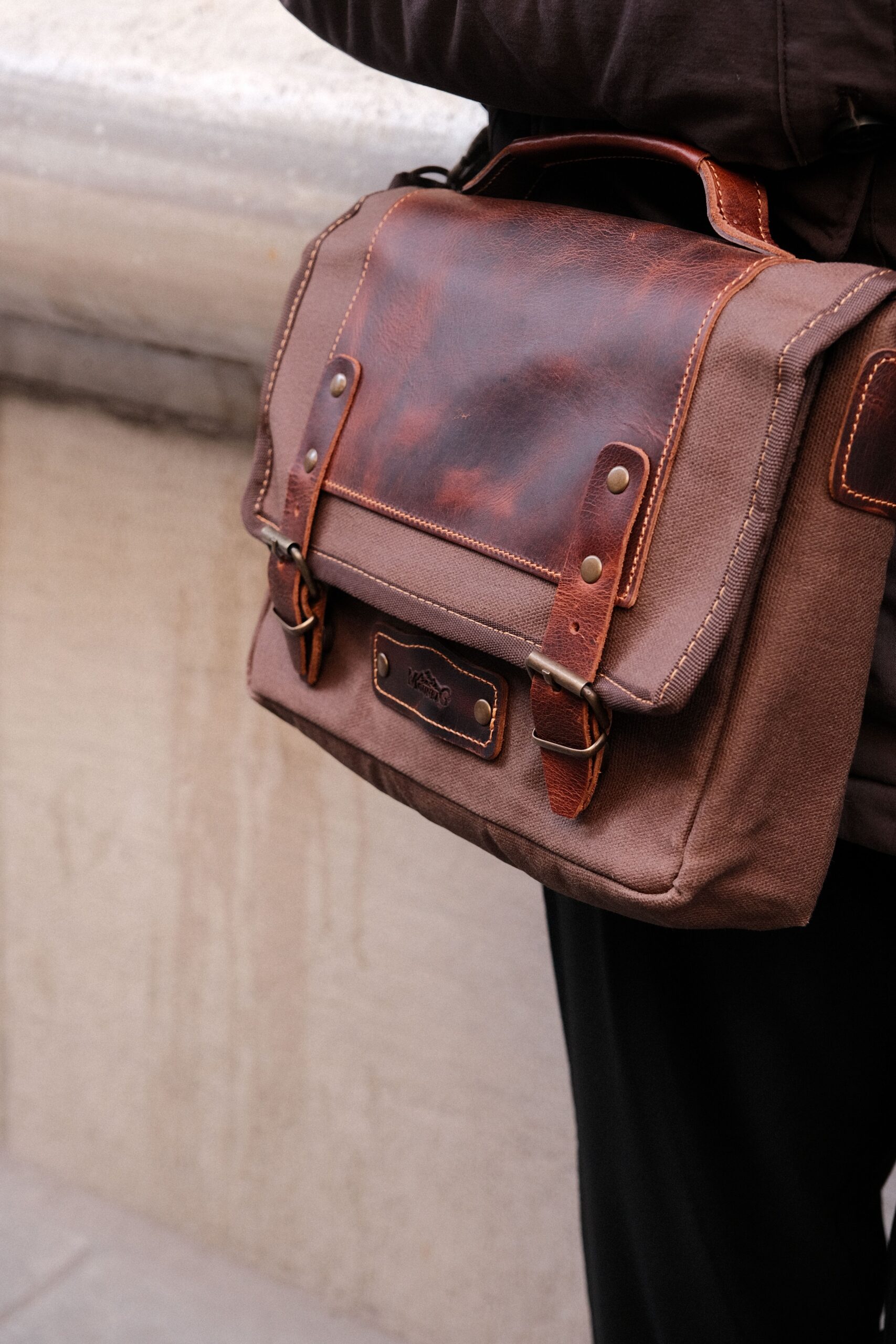
Chapman leans hard into regional English sourcing: Yorkshire wool, Lancashire canvas, Borders tweed, and Kentish leather, worked by Cumbrian craftspeople. That’s a genuinely traceable domestic supply chain, and it shows in the finished bags — more waxed canvas and tweed detailing than the smooth calf leather that dominates the rest of this list, a look that owes more to the shooting field than the boardroom even on the briefcases.
Where It Sits on Price
Briefcases and bags run roughly £190 to £730, which makes Chapman the most accessible genuinely UK-made brand on this list — cheaper at the entry point than Carl Friedrik, and considerably cheaper than Tusting or Bennett Winch. That’s worth knowing if you want real British manufacturing without the four-figure price tags Dunhill and Swaine command.
What to Look At
Chapman’s briefcases start around £349, which makes them the cheapest genuinely made-in-Britain option on this list by some distance. What you’re buying is the field-bag formula applied to the commute: British-dyed bonded waterproof cotton canvas, military-grade webbing, and hand-selected leather trim, sewn in Cumbria. What to inspect: the canvas bonding (it should feel stiff and dense, closer to a tarpaulin than a tote bag), the webbing attachment points, and the honesty of the finish — Chapman doesn’t burnish and lacquer edges like the £2,000 makers, and doesn’t pretend to. The right expectation is a bag that shrugs off weather and a decade of use, not one that impresses across a boardroom table. At this price, that’s the correct trade.
The Verdict
Chapman is the pick on this list if the sporting-heritage aesthetic appeals more than a clean formal briefcase, or if budget genuinely matters and you’re not willing to trade away UK manufacturing to hit it. It won’t read as boardroom-formal the way Dunhill or Aspinal do, but that’s the point — it’s a different silhouette built for a different life.