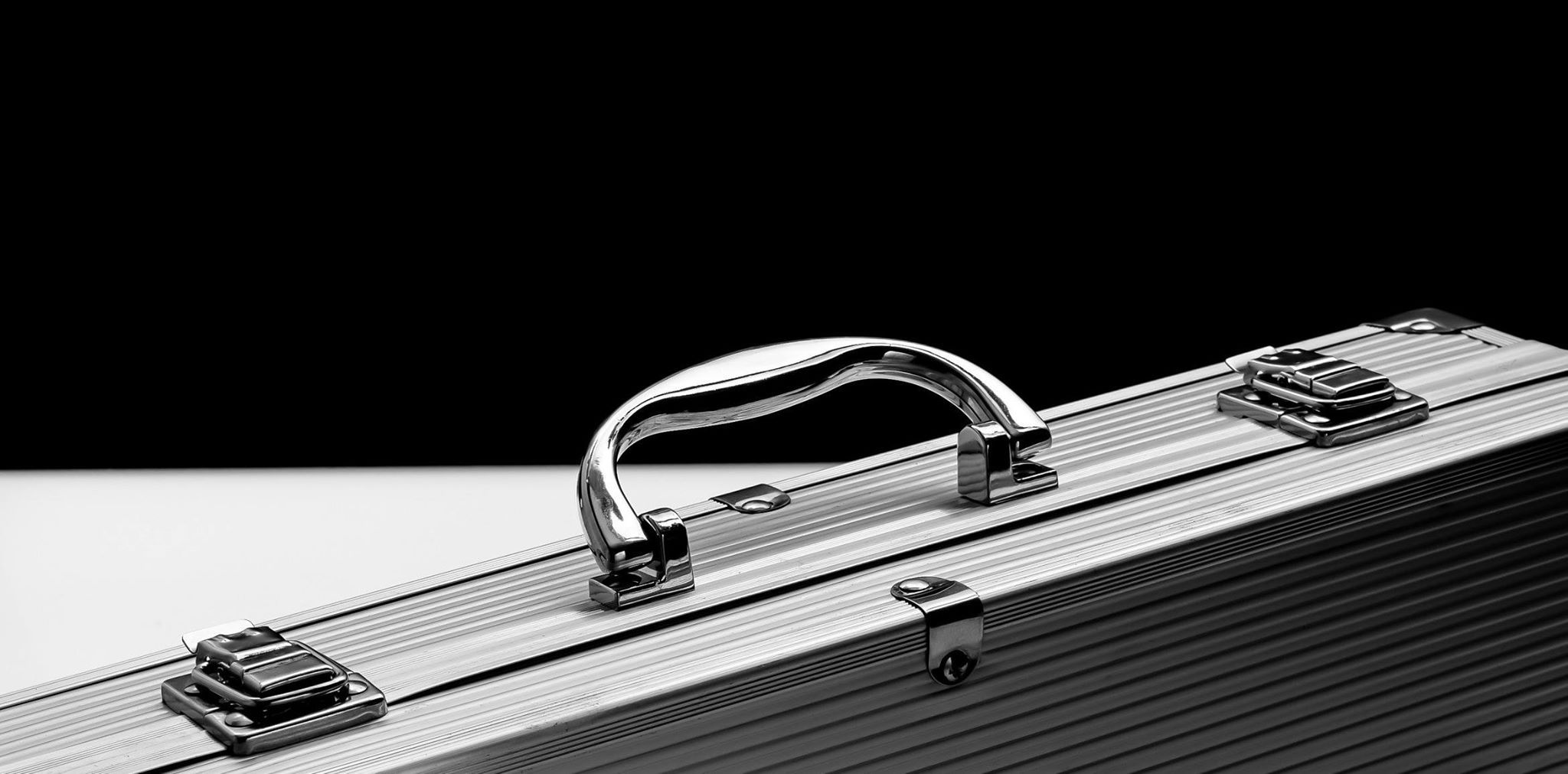
Carl Friedrik has just launched its first aluminium suitcase — a real category move for a brand that’s built its name on leather briefcases and wallets, not hard-shell luggage. The Carry-on (41L) comes in at £645, paired with a choice of three vegetable-tanned leather trims (black, chocolate, or cognac), and the brand says more sizes are coming later in 2026.
It’s a launch worth a closer look for one reason in particular: aluminium luggage is Rimowa’s territory, and has been for the better part of a century. So how does Carl Friedrik — a direct-to-consumer British brand founded in 2012 — actually compare on its first attempt to the suitcase that defined the category?
The numbers, side by side
Rimowa’s equivalent, the Original Cabin, is £1,090 in the UK for 35 litres and 9.5 lbs (4.3kg), in anodised aluminium with a lifetime guarantee and TSA-approved locks. Carl Friedrik’s Carry-on is £645 — just over half the price — for 41 litres and 10.8 lbs (4.9kg), also with TSA-approved locks (a combination style, rather than Rimowa’s built-in mechanism), silent 360-degree wheels made by Hinomoto, and bespoke steel rivets holding the leather trim in place.
So: more capacity and a meaningfully lower price, at a small weight cost, with both brands covering the one thing that actually matters at airport security — a TSA-approved lock. Whatever separates these two suitcases, it isn’t the spec sheet.
Why the price gap is real, not a quality signal
The obvious read is “cheaper must mean worse,” and that’s the wrong conclusion here. Carl Friedrik sells direct-to-consumer, the same model that’s let it price its Naples-made leather goods closer to Aspinal than to Dunhill or Swaine. Rimowa, by contrast, carries decades of brand equity, a global retail footprint, and the markup that comes with both. The price gap tells you more about distribution economics than it does about which suitcase is better built.
What it doesn’t erase is a gap in track record. Rimowa has been making aluminium cases since the 1950s and has the reputation — well earned — to show for it. This is Carl Friedrik’s first attempt at the category. The materials and hardware spec well on paper (aluminium shell, steel rivets, a proper telescoping handle), but there’s no multi-year record yet of how this specific case holds up to actual baggage handlers. That’s not a knock on the product — it’s simply the position of anything new.
The real differentiator: leather trim
The detail that actually sets this apart from Rimowa isn’t the price — it’s the leather. Rimowa’s aesthetic is pure metal, aluminium as the whole statement. Carl Friedrik has bolted its existing identity onto a new category: vegetable-tanned leather trim in the same finishes it already uses on its briefcases, so a Carl Friedrik suitcase and a Carl Friedrik bag can travel as a matched set. For a brand whose whole proposition has been “the leather goods you’d expect at twice the price,” extending that same material story into hard-shell luggage is a coherent move, not a bolt-on gimmick.
Worth it?
If you already own Carl Friedrik leather goods and want luggage that matches, or you want serious aluminium capacity for meaningfully less money, this is a well-specified first attempt. If you want the specific reassurance of a product with decades of independent reviews behind it, Rimowa’s track record still counts for something. Both are reasonable calls — this isn’t a case of one brand beating the other, just two different bets on what you’re actually paying for.
Worth watching where Carl Friedrik takes the range next — the brand has said larger sizes are coming before the end of the year.