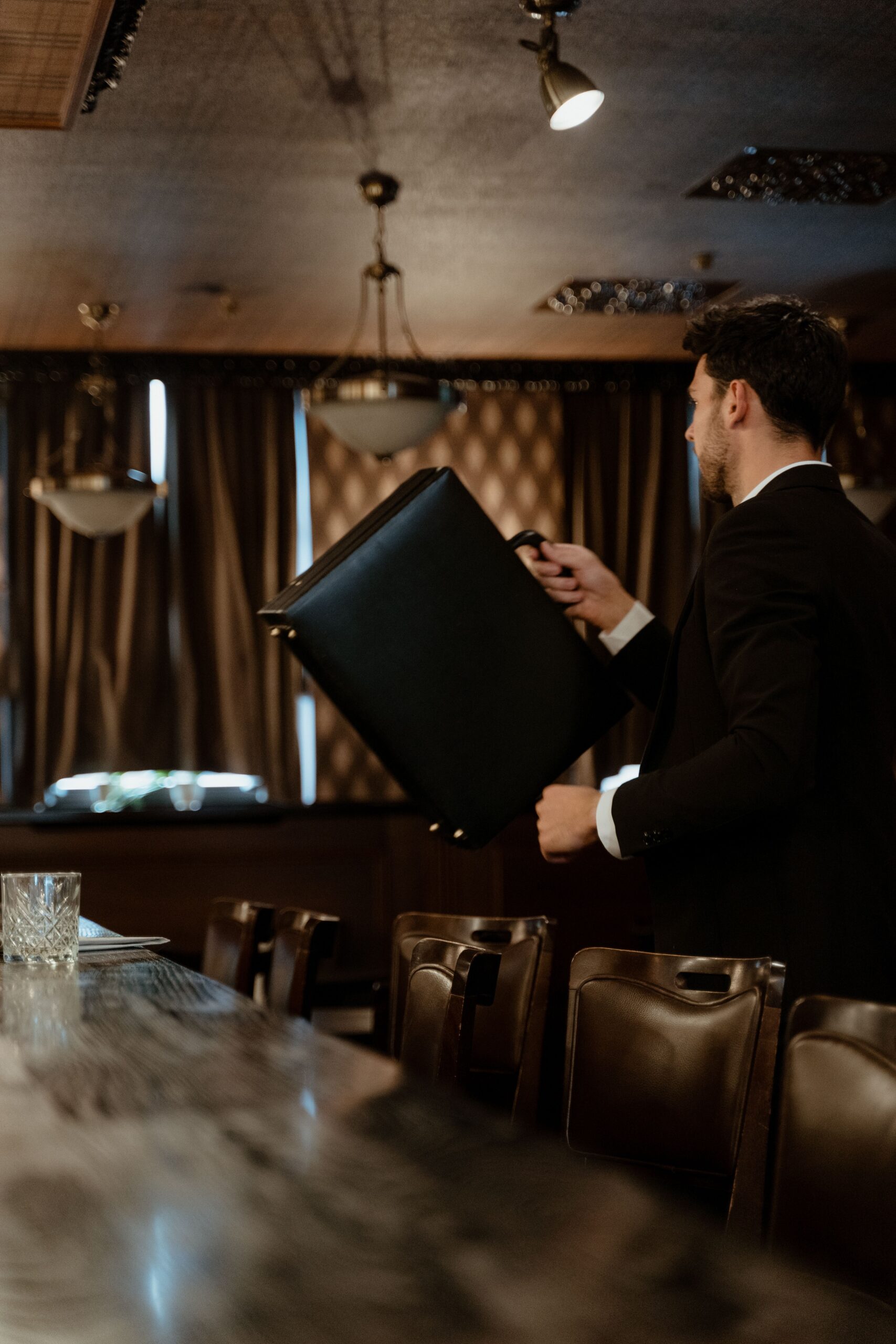
This article contains affiliate links. If you buy through the 1893 Harness link below, we may earn a commission at no extra cost to you — see our affiliate disclosure for details. This has no effect on our verdict.
Dunhill is the third brand on this list with roots in saddlery, after Tusting and Swaine, which says something about how many of Britain’s leather goods houses started out making horse tack rather than handbags. Where it diverges from those two is ownership — Dunhill isn’t family-run any more, and that distinction actually matters to what you’re buying.
From Saddlery to “Motorities”
Alfred Dunhill inherited his father’s saddlery business on London’s Euston Road in 1893, aged 21. Rather than sticking with horses, he read the room correctly — the motor car was coming — and pivoted the business into what he called “Motorities”: everything the new breed of driver needed except the car itself. Goggles, driving coats, trunks, gloves. He opened a shop on Conduit Street in Mayfair in 1902, and by 1921 there was a New York store, with continental Europe following in 1924. The saddlery instinct for durable leather never went away; it just got redirected into travel and business accessories as the product itself changed.
Dunhill is now owned by Richemont, the Swiss luxury group that also owns Cartier, Piaget, and Montblanc. That’s a very different structure to Tusting’s fifth-generation family ownership or even Bennett Winch’s founder-led setup — Dunhill operates with conglomerate-level resources, design teams, and marketing behind it, rather than a single family’s name on the door.
The Current Range
Men’s leather goods sit across a handful of named collections — Alfred, Bourdon, Cadogan, and the 1893 Harness line, the last of which nods directly to the saddlery origins with its name. Construction is grain and patina calf leather throughout, aimed squarely at the boardroom-and-beyond end of the market rather than anything rugged or travel-first.
Where It Sits on Price
Current briefcases and document cases run from around £1,495 for the Cadogan Single-Gusset up to £3,600 for the Alfred 40 Patina Calf — putting Dunhill in almost exactly the same bracket as Swaine, and well above Tusting, Bennett Winch, Aspinal, or Mulberry. That’s the Richemont effect: you’re paying luxury-conglomerate pricing, backed by design resources and brand cachet that a family workshop can’t match, but without the single-artisan story Swaine can point to for the same money.
What to Look At
The 1893 Harness line is the one that connects today’s Dunhill to its saddlery origins — full-grain leather with a firm, bridle-like hand, cast (not stamped) hardware, and clean, unbranded faces. Expect roughly £2,000–£2,800 depending on whether you’re looking at the single document case or the full briefcase, and check current prices directly as they move with the fashion calendar. What to inspect: the edge finishing, which on the Harness pieces is properly built up in layers rather than painted once, and the leather’s temper — it should feel dense, not spongy. The thing to weigh is that at this money you’re within reach of Swaine’s Westminster, where the same £2,500 buys single-craftsman construction rather than luxury-house positioning.
The Verdict
Dunhill earns its heritage claim the same way Tusting and Swaine do — the saddlery-to-leather-goods lineage is real — but the ownership model means you’re buying into a global luxury house rather than a family business. That’s not a downside exactly, but it’s a different proposition: sharper design language and conglomerate polish, at a price point that puts it up against Swaine rather than the more accessible names on this list.