Tusting is the kind of brand whose “heritage” claim actually checks out. Five generations, same family, same corner of England, since 1875. That’s rarer than the marketing copy of most “heritage” leather brands would have you believe — and it’s worth understanding how Tusting got here before deciding whether it’s worth your money.
A Tannery First, a Bag Brand Second
Tusting started life in 1875 as a tannery in Harrold, Bedfordshire, founded by Charles Pettit to supply leather to the shoemakers of England’s shoe-manufacturing belt — the sewing machine had just made ambitious new footwear designs possible, and someone needed to supply the hides. The business moved a few miles down the road to Lavendon, Buckinghamshire, where it still operates today.
The family’s staying power is the actual story here. Charles Pettit’s grandson Jack rebuilt the tannery from scratch after the original was sold off following his grandfather’s death — he’d been off fighting with the Royal Flying Corps in Mesopotamia at the time. When the 1970s recession pushed most English shoemaking offshore and gutted domestic demand for tanned leather, the family didn’t fold; they pivoted to importing leather on behalf of the shoemakers who survived, then in the late 1980s started making their own finished bags. That’s the point where Tusting became the brand you’d recognise today. Alistair Tusting — Charles Pettit’s great-great-grandson — now runs the business, with Gillian Tusting overseeing brand and customer experience.
What Actually Happens in the Workshop
Every Tusting bag is made at the Lavendon workshop, a couple of miles from the original tannery site, sitting right at the junction of Northamptonshire, Buckinghamshire, and Bedfordshire — England’s old leather country. This is a genuine correction to note: the brand isn’t Norfolk-based, despite that being an easy assumption to make about a heritage English leathergoods maker. It’s Buckinghamshire, full stop.
The process is eight stages — pattern-making, full-grain leather selection, hand and machine cutting, edge painting, skiving, splitting, and bench-working — with artisans working in pairs. A single bag design can break down into as many as 40 separate pattern pieces before a stitch goes in. Whether that level of process detail matters to you personally is a fair question, but it’s a genuinely hands-on operation rather than a marketing gloss over an outsourced supply chain, which is more than can be said for a lot of brands trading on the word “heritage.”
Where Tusting Sits Against the Rest of the Field
For men, Tusting’s range centres on business bags (the Marston and Clipper lines), the Wymington briefcase and satchel, folio cases, weekenders, and backpacks — all in full-grain leather with a strong emphasis on materials that visibly age rather than stay pristine. Pricing sits in similar territory to Bennett Winch and the more considered end of Aspinal: not entry-level, but short of Valextra money. That puts it in direct competition with Bennett Winch specifically — both are British-made, both lean on genuine manufacturing heritage rather than borrowed prestige, and the choice between them mostly comes down to aesthetic. Bennett Winch reads more travel-and-outdoors; Tusting reads more traditional English leather goods, closer in spirit to the shoemaking trade it grew out of.
What to Look At
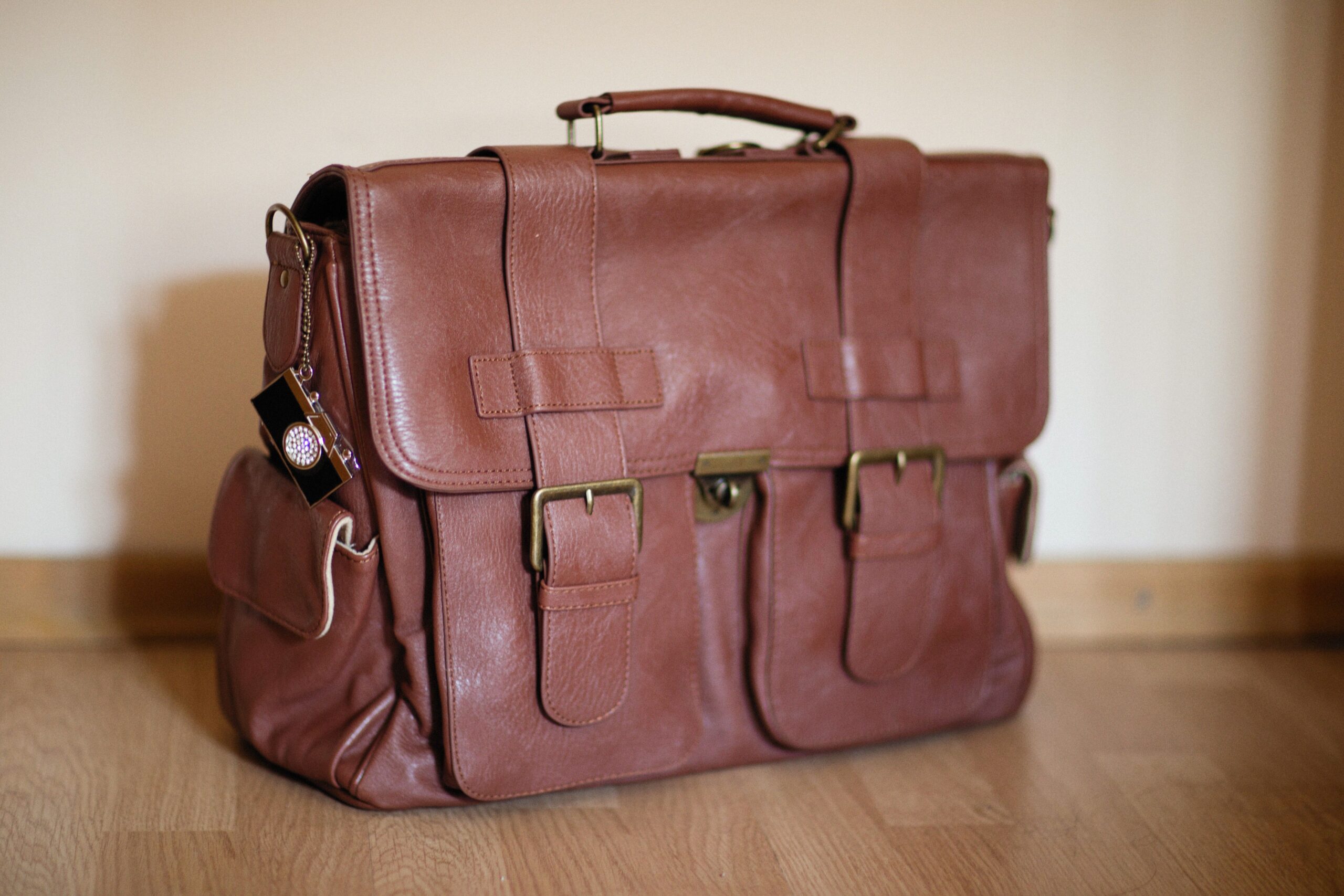
The Leather Clipper is the right first look — a relaxed satchel briefcase at £830 in the large size (15/16″ laptop) direct from Tusting. The leather choice matters more than the colour: Bridle is the traditional saddlery option, vegetable-tanned with oak bark and mimosa, firm at first and the best ager of the three; Sundance Floodlight is the signature waxy business leather; Aztec Crazyhorse is the toughest, hot-stuffed with oils for a lived-in look from day one. Details worth inspecting: the quick-release collar-stud closures — simpler and faster than buckles, and a Tusting signature — and the jacquard lining, woven rather than printed. Everything is made in their own Lavendon workshop, which is exactly the fully in-house model this site rates them for.
The Verdict
Tusting earns its heritage claim rather than just asserting it — five generations, one family, one small corner of England, and a workshop you can actually trace back to the original tannery. If that kind of provenance matters to you as much as the finished bag, it’s one of the more legitimate heritage buys on this list. If you’re purely after the look, the manufacturing story is a nice-to-have rather than a dealbreaker either way.